

How Grooming Clippers Evolved—and What Matters Today
From electric motors to replaceable cutting parts, explore the changes that made modern grooming tools easier to use and maintain.
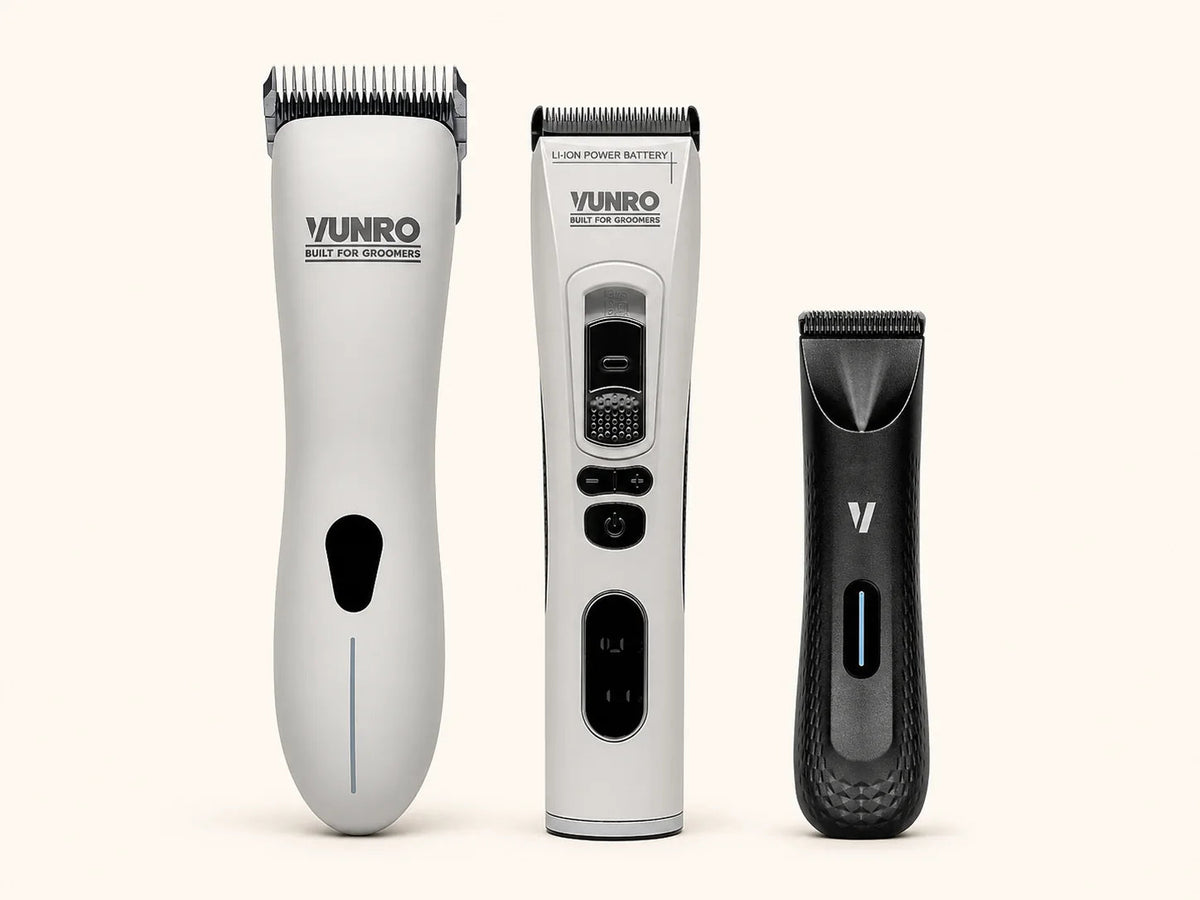
The practical answer
The useful story of clipper development is about control, consistency and serviceability. Today, those qualities matter more to a buying decision than an impressive-sounding technology label.
Electric power changed the working rhythm
Hand-operated clippers made each cutting movement depend on the hand squeezing the handles. Electric mechanisms took over that repeated action. The Western Australian Museum’s personal-grooming history, page 4, illustrates that transition. For today’s groomer, the useful comparison is how a tool fits the coat, the task and the maintenance routine.
For the working groomer, the important development is repeatable cutter movement from a motor. The hand guides the tool while the mechanism performs the cutting action. That makes the condition of the motor, drive and cutting assembly part of the same practical question: can this setup deliver a controlled, comfortable cut?
Detachable parts made maintenance more flexible
A replaceable blade lets a groomer change length or remove a blade for care without replacing the whole clipper. Detachable systems can make maintenance more flexible, but blade fittings and replacement parts still need to match the exact model.
New options bring new checks
| Modern option | Useful question before buying |
|---|---|
| Cordless operation | Does the stated runtime suit my work, and what is the charging or battery service arrangement? |
| Different cutter materials | Who can service this cutter, and what replacement parts are available? |
| Interchangeable blades | Which models are explicitly compatible? |
| Multiple speeds | When does the manufacturer recommend each setting? |
| Lighter or differently shaped body | Can I hold it comfortably and control it through the movements I actually use? |
Separate a feature from a demonstrated benefit
A coating, motor name or material description is a feature. A claim that it lasts longer or cuts faster needs a defined comparison. Look for the conditions behind the claim: blade size, coat preparation, duty cycle and maintenance. Without those details, treat it as a prompt to ask questions rather than a measured result.
The same caution applies to heat. No product description should replace checking the working blade during a groom. Build breaks, blade changes and maintenance into your routine according to the equipment and dog in front of you.
Buy a system you can support
Before adding another clipper, make a small compatibility list covering your existing blades, comb attachments and spare parts. Write down who will service the tool and how you will work if it is unavailable. A considered purchase is one that fits the whole kit and can be maintained—not simply the newest item on the shelf.
Explore the VUNRO D-Series clipper for its current features and matching blades, or check compatibility with equipment you already own.
Read next
- Choosing a Dog Clipper Blade: Fit, Length and Finish
- Blade Maintenance: A Clean, Dry, Ready-to-Use Routine
Sources and further reading
The museum reference documents the move from hand-operated to electric hair clippers. The modern buying checklist is VUNRO editorial guidance, using the D-Series as a current product example.
Keep learning
More from the Blade Blog

Separate a Dry Surface from a Dry Coat
Read the guide →
Check the Outline in Motion Before Making Another Cut
Read the guide →


